
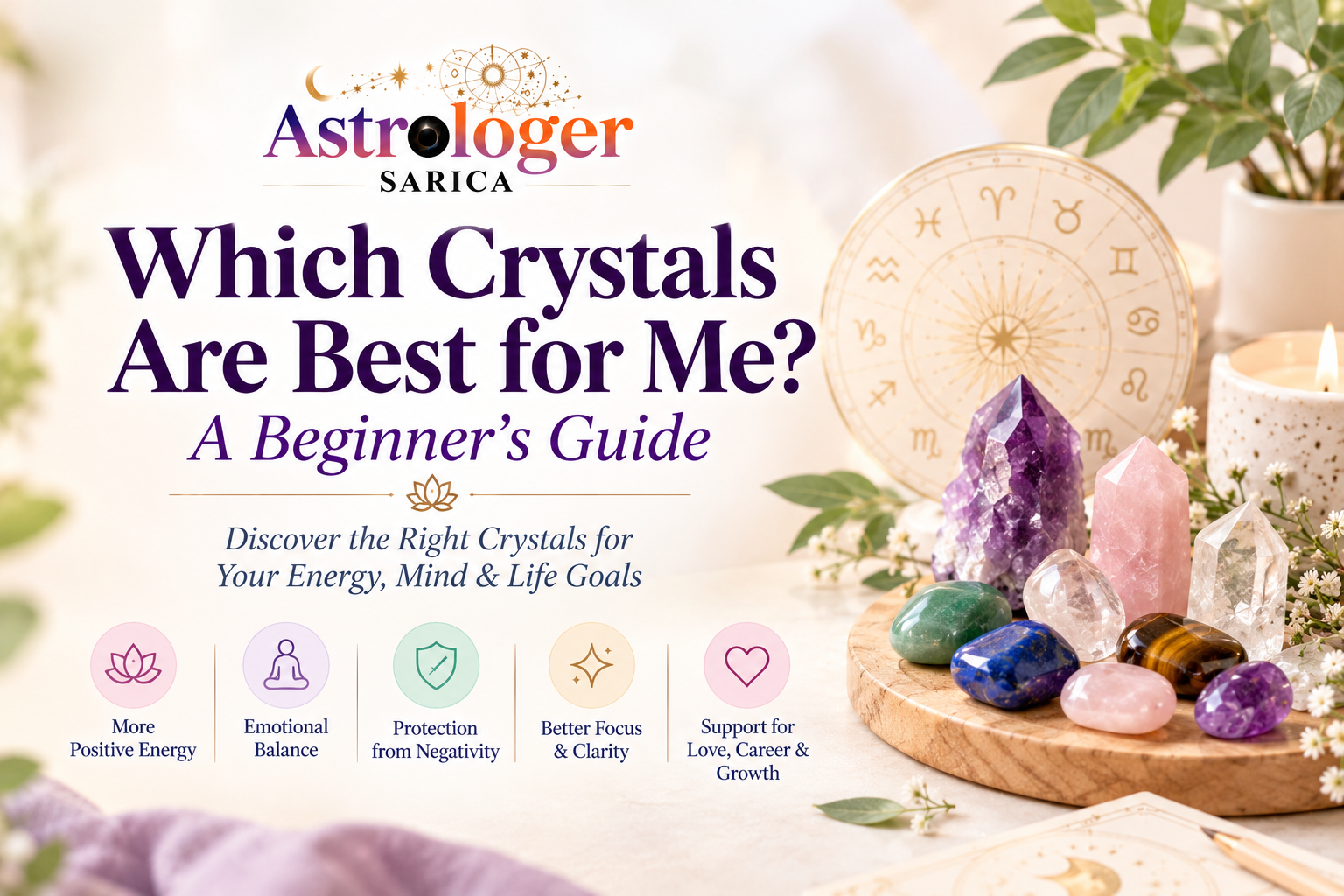
Which crystals are best for me? If you have ever asked this question, you are not alone. Many people explore crystals because they like their colours, natural patterns, and traditional meanings. Others choose crystals as personal reminders of peace, confidence, focus, or positive intentions.
However, choosing a crystal does not have to be complicated. Start by thinking about what you like and what you want the crystal to represent in your daily life.
Some crystal traditions associate rose quartz with love, amethyst with calmness, and citrine with abundance. These meanings come from spiritual and cultural practices. Scientific evidence does not establish that crystals can produce these effects or change your future.
In this guide, you will discover popular crystals, their traditional meanings, and simple ways to choose one that suits your preferences.
Which Crystals Are Best for Me?
The best crystal for you depends on your interests, personal preferences, and the meaning you want to associate with it. For example, you might choose rose quartz because you like its soft pink colour. Alternatively, you might prefer clear quartz because of its transparent appearance.
Many crystal traditions also connect stones with particular intentions. Therefore, you can use these traditional meanings as a starting point rather than treating them as guaranteed results.
Popular Crystals and Their Traditional Meanings
| Crystal | Common Traditional Meaning | Why People Choose It |
|---|---|---|
| Rose Quartz | Love and compassion | Its soft pink colour and association with self-love |
| Amethyst | Calmness and reflection | Its purple colour and spiritual symbolism |
| Clear Quartz | Clarity and intention | Its transparent appearance and versatile design |
| Citrine | Abundance and optimism | Its warm yellow colour and positive symbolism |
| Black Tourmaline | Protection and grounding | Its dark appearance and traditional protective symbolism |
| Tiger’s Eye | Courage and confidence | Its golden-brown bands and bold appearance |
| Green Aventurine | Opportunity and growth | Its green colour and association with new beginnings |
| Sodalite | Communication and expression | Its blue colour and traditional connection with self-expression |
These meanings can vary across crystal traditions. Moreover, no crystal has been proven to guarantee love, wealth, confidence, protection, or success.
Quick tip: If you are new to crystals, start with one that you genuinely like. You do not need to buy a large collection to explore their traditional meanings.
How to Choose a Crystal Based on Your Personal Goals
Many people begin their search with a specific question. They may want a symbol of self-love, a reminder to stay focused, or an object that supports a personal routine.
You can use the following guide to explore common crystal associations.
1. Crystals Associated With Love and Self-Love
Rose quartz is one of the best-known crystals associated with love and compassion. Its gentle pink colour makes it popular in jewellery, decorative pieces, and personal collections.
In crystal traditions, people often use rose quartz as a reminder to practise kindness towards themselves and others.
For example, you might keep a rose quartz stone on your desk as a reminder to treat yourself with patience. However, the stone itself cannot guarantee a romantic relationship or change another person’s feelings.
2. Crystals Associated With Calmness
Amethyst is a purple variety of quartz. Many people appreciate it for its colour and its traditional connection with calmness and reflection.
You might place an amethyst crystal near a reading area or include it in a personal meditation routine. In this way, it can serve as a visual reminder to pause and reflect.
However, amethyst has not been scientifically proven to treat stress, anxiety, or sleep problems. Seek professional support if these concerns affect your daily life.
3. Crystals Associated With Confidence
Tiger’s eye is known for its golden-brown bands and distinctive appearance. In some crystal traditions, people associate it with courage, confidence, and practical decision-making.
If you like this stone, you could wear it as a bracelet or keep it as a small personal object.
At the same time, confidence develops through practice, preparation, and experience. A crystal can represent your intention, but it cannot replace these steps.
4. Crystals Associated With Abundance
Citrine is a yellow to golden variety of quartz. Some crystal traditions associate it with optimism, abundance, and new opportunities.
For this reason, people sometimes choose citrine as a reminder of their financial or professional goals.
For example, you could place a citrine stone near your workspace while planning your next project. However, it cannot guarantee income, business growth, or financial success. Good planning and informed decisions remain important.
5. Crystals Associated With Focus and Clarity
Clear quartz is popular because of its transparent appearance and simple design. Some crystal traditions associate it with clarity, intention, and focus.
You might keep clear quartz near your study desk as a reminder to organise your tasks and avoid distractions.
Still, the crystal itself has no established scientific effect on concentration. A clear routine, sufficient rest, and a suitable working environment can help you manage your tasks more effectively.
Which Crystal Is Right for Your Zodiac Sign?
Some crystal guides connect crystals with zodiac signs. These associations can offer inspiration, especially if you enjoy astrology. However, different guides may recommend different crystals for the same sign.
The table below provides examples of popular associations. It is not a personalised astrological recommendation.
| Zodiac Sign | Example Crystal Association |
|---|---|
| Aries | Carnelian |
| Taurus | Rose Quartz |
| Gemini | Citrine |
| Cancer | Moonstone |
| Leo | Tiger’s Eye |
| Virgo | Amazonite |
| Libra | Rose Quartz |
| Scorpio | Obsidian |
| Sagittarius | Amethyst |
| Capricorn | Black Tourmaline |
| Aquarius | Clear Quartz |
| Pisces | Amethyst |
These pairings vary by tradition and source. You do not have to follow them if another crystal appeals to you more.
Also, crystal associations are not the same as traditional Vedic gemstone recommendations. If you want a gemstone recommendation based on your Kundli, an astrologer may examine your birth details and planetary placements separately.
Crystals and Their Traditional Meanings at a Glance
If you feel confused by the number of available crystals, use this simple table to compare a few popular choices.
| What You Want to Explore | Crystal Often Associated With It |
|---|---|
| Love and compassion | Rose Quartz |
| Calmness and reflection | Amethyst |
| Clarity and intention | Clear Quartz |
| Optimism and abundance | Citrine |
| Courage and confidence | Tiger’s Eye |
| Opportunity and growth | Green Aventurine |
| Grounding and protection | Black Tourmaline |
| Communication and expression | Sodalite |
Treat these associations as traditional symbolism rather than proven outcomes. Choose a crystal because you enjoy its appearance or find its meaning personally useful.
Can You Choose a Crystal According to Your Birth Chart?
Some people prefer to explore crystals through astrology. In these cases, an astrologer may discuss planetary symbolism, zodiac associations, or the person’s broader spiritual interests.
However, crystal selection and Vedic gemstone selection can follow different methods. A crystal associated with a zodiac sign is not automatically suitable as an astrological remedy.
If you want to explore this approach, first clarify your goal. Are you looking for a decorative crystal, a symbolic reminder, or a traditional gemstone recommendation based on your Kundli?
Once you understand the difference, you can make a more informed decision.
How to Choose a Good-Quality Crystal
After choosing a crystal, take time to check the product before you buy it. Crystal shops sell natural minerals, treated stones, dyed materials, glass, and synthetic products.
These materials can look similar in photographs. Therefore, read the seller’s description carefully.
What to Check Before Buying
| Buying Factor | What to Look For |
|---|---|
| Material | Confirm the mineral or material used |
| Authenticity | Ask whether the stone is natural, synthetic, dyed, or treated |
| Appearance | Check colour, pattern, surface condition, and visible flaws |
| Documentation | Request reliable identification when appropriate |
| Price | Compare similar products from different sellers |
| Seller reputation | Check clear product descriptions and customer policies |
| Return policy | Understand the terms before purchasing |
Remember that natural crystals often have variations in colour and pattern. These differences do not automatically mean a stone is fake.
Also, avoid sellers who claim that a crystal will definitely bring money, cure an illness, protect you from every negative influence, or solve all your problems.
How to Care for Your Crystals
Different crystals need different types of care. Some can scratch easily, while others may fade or become damaged if you expose them to water, sunlight, heat, or chemicals.
Therefore, check the care requirements for your specific stone before cleaning it.
- Use a soft cloth: Gently wipe dust from suitable stones and jewellery.
- Avoid harsh chemicals: Household cleaners may damage a crystal or its surface treatment.
- Check before using water: Some minerals can react poorly to moisture.
- Protect delicate stones: Store them separately to reduce scratches.
- Follow jewellery care advice: Metal settings may need different cleaning methods from the stone itself.
You do not need to use a special ritual to care for a crystal. If a spiritual practice is meaningful to you, choose a method that is safe for the specific material.
Common Mistakes to Avoid When Choosing Crystals
Buying crystals can be enjoyable, but misleading claims can make the process confusing. Keep these points in mind before making a purchase.
- Buying too many crystals at once: Start with one or two stones that interest you.
- Choosing only by zodiac sign: Zodiac associations vary, and they do not establish personal suitability.
- Expecting guaranteed results: Crystals cannot guarantee love, money, health, or success.
- Ignoring product details: Always check the material, treatment, and seller information.
- Spending beyond your budget: Choose a stone that fits your finances.
- Using crystals instead of professional help: Crystals should not replace medical care, financial advice, or other qualified support.
Instead, focus on what you enjoy, learn about the material, and treat traditional meanings as symbolic rather than guaranteed.
How Astro Sarica Can Help You Explore Astrology and Crystals
If you are interested in both astrology and crystals, you may want to understand how crystal traditions differ from Vedic gemstone practices.
Astro Sarica shares astrology-related information to help readers explore birth charts, planetary symbolism, and traditional gemstone concepts.
If you seek personalised astrological guidance, ask the practitioner to explain their method and the reasons behind any recommendation. Also, discuss your budget before purchasing an expensive gemstone.
A responsible approach should explain traditional beliefs clearly and avoid promises of guaranteed results.
Explore Astro Sarica: https://astrosarica.com/
Frequently Asked Questions About Crystals
1. Which crystals are best for me?
The best crystal for you depends on your personal preferences and the meaning you want it to represent. You can explore traditional associations with rose quartz, amethyst, citrine, or clear quartz. However, no crystal has been proven to produce a specific life outcome.
2. Which crystal is commonly associated with love?
Rose quartz is traditionally associated with love, compassion, and self-love. People often choose it because of its pink colour and symbolic meaning. However, it cannot guarantee a relationship or change another person’s feelings.
3. Can I choose a crystal according to my zodiac sign?
Yes, you can explore zodiac-based crystal associations as part of your personal interests. However, different sources may offer different pairings, and these associations do not establish that a crystal is right for you.
4. Are crystals and astrological gemstones the same?
Not always. Crystal traditions often focus on the symbolic meanings of minerals, while Vedic gemstone recommendations may involve planetary associations and birth-chart interpretation. The two approaches can overlap, but they are not identical.
5. Do crystals really work?
People may find personal meaning in crystals or use them as reminders of their intentions. However, scientific evidence does not establish that crystals have special healing powers or can guarantee changes in relationships, finances, or health.
6. How many crystals should a beginner buy?
You can start with one crystal that you like. There is no need to purchase a large collection. First, learn about its material, care requirements, and traditional meaning.
7. How can I tell whether a crystal is genuine?
Check the seller’s description, ask about treatments, and request suitable identification when necessary. Appearance alone may not prove authenticity, especially when natural stones, treated materials, and imitations look similar.
Conclusion
If you are wondering which crystals are best for you, start with your interests and personal preferences. Rose quartz, amethyst, clear quartz, citrine, and tiger’s eye are popular choices, each with its own traditional associations.
However, these meanings do not guarantee specific results. Choose a crystal that you appreciate, check its quality, and stay within your budget.
If you also follow astrology, remember that crystal traditions and Vedic gemstone recommendations may use different approaches. Learning about both can help you make a more informed choice.