
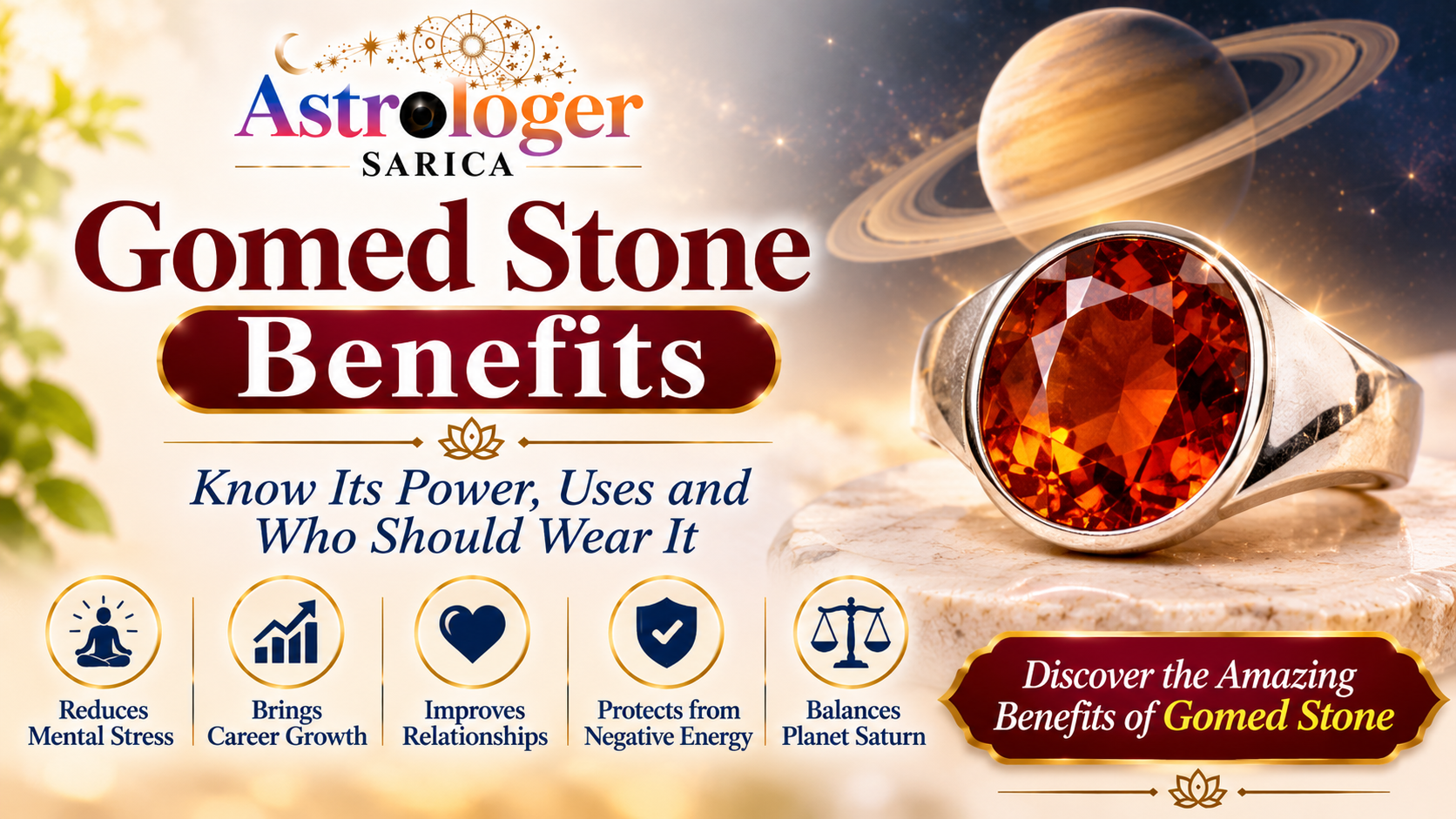
Gomed stone benefits are a very common search, and also a topic where astrologers ask for care. Gomed is the Hindi name for hessonite, the traditional stone of Rahu in Vedic astrology. This guide explains what tradition associates with it, who it is usually considered for, which cautions astrologers mention, and how to check the quality of the stone, without exaggeration.
Everything below describes a traditional belief practice. It does not promise any result, and it should never replace medical, legal or financial advice.
Gemstone astrology is a traditional belief practice. It is not a medical treatment, and no astrologer can guarantee results.
Why Gomed Is Linked With Rahu
In Vedic astrology, each of the nine planets has a traditional stone, and hessonite belongs to Rahu, the shadow planet associated with ambition, worldly drive, sudden change and unconventional paths. That is why the benefits of gomed in astrology are described in those terms. To see gomed next to the other eight stones, read our guide to astrology gemstones.
Hessonite Benefits: What Tradition Says
The traditional hessonite benefits are symbolic. Gomed is associated with:
- Ambition and drive: in work and worldly matters.
- Clarity in confusing periods: a calmer mind when things feel restless or unclear.
- Handling change: including foreign matters and unconventional paths.
These are traditional associations. There is no established scientific evidence that wearing a gemstone produces specific outcomes.
Who Should Wear Gomed?
Gomed is not for everyone, and a zodiac list cannot decide it. Astrologers usually look at the position and role of Rahu in your birth chart, your ascendant and your current planetary period. A stone that is considered helpful for one chart may not suit another, so it is wise to confirm before buying. You can see how the choice is made in which gemstone should I wear according to my kundali, or start with gemstone according to rashi.
Cautions Astrologers Often Mention
- Rahu’s stone is regarded as a strong one, so many astrologers prefer a chart check before wearing it.
- Some combinations of stones are not usually worn together without advice.
- If you feel unwell or uneasy for any reason, speak to a qualified professional and do not rely on a stone.
How Gomed Is Traditionally Worn
Commonly mentioned practices include the middle finger and starting on a Saturday. The right weight, metal and day are normally decided for your chart, so confirm them instead of copying a figure from the internet. Hessonite is softer than sapphire, so a protective setting and gentle care are advisable.
Benefits Are Not the Same as Quality: Check the Stone Too
Even a gomed that is suitable in astrology needs to be genuine hessonite and well described. Gomed is sometimes confused with citrine, orange glass, spessartine garnet or zircon. Ask for a lab report and written details of the stone. Organisations such as GIA publish educational material on gemstone identification. For what decides the cost, read our guide to gomed stone price, and see the gemstone certificate guide.
Check Your Kundli Before You Buy Gomed
The simplest way to know whether gomed is considered for you is to discuss your birth chart. Share your date, time and place of birth with an astrologer. Our guides to gemstone consultation and gemstone astrologer explain what to expect.
Message Astro Sarica on WhatsApp or visit the contact page to ask about a gemstone consultation. Confirm the format, fee and whether any purchase is required before you book.
Frequently Asked Questions
1. What are the benefits of wearing gomed?
Tradition links gomed with Rahu and with ambition, clarity and handling change. These are traditional associations, not guaranteed outcomes.
2. Is gomed suitable for everyone?
No. Suitability depends on your birth chart, and astrologers generally advise a chart check first.
3. Which finger is gomed worn on?
Commonly the middle finger, but practices vary. Confirm for your chart.
4. Does gomed have side effects?
In astrology tradition, a stone that does not suit the chart is said not to suit the wearer. These are beliefs, not medical facts, and health concerns should be discussed with a doctor.
5. How do I know a gomed is genuine?
Ask for a lab report and written details of the stone, and compare the rate per carat with similar stones.
6. Should I check my kundli before buying?
Many astrologers advise it, because the suggestion depends on your chart and Rahu’s role in it.
Conclusion
The gomed stone benefits in astrology are traditional associations with Rahu: ambition, clarity and handling change. They are not guaranteed results, and gomed is not right for everyone. Confirm suitability with your kundli, check the stone’s quality separately and take your time before buying. You may also like our guides to cat eye stone price and gemstone price.
Follow Astro Sarica
Instagram: https://www.instagram.com/astrologer_sarica
Facebook: https://www.facebook.com/people/Astrologer-Sarica-ji/100064037110678/